
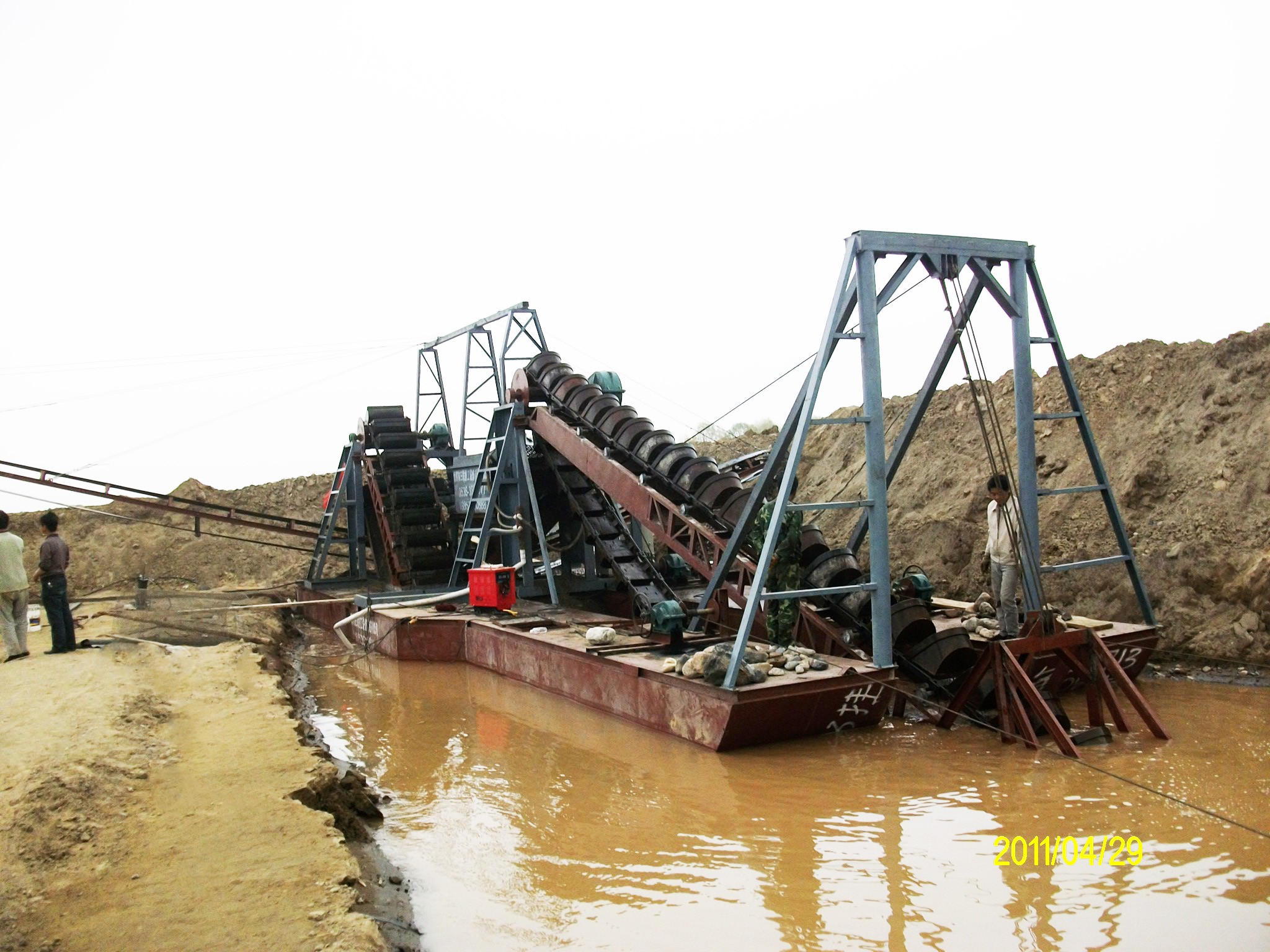
For small-scale contractors evaluating a sand dredger investment, understanding the full cost breakdown—acquisition, operation, and ROI—is critical. Whether you're sourcing a gold dredger for alluvial mining or a versatile dredger for land reclamation, Qingzhou Sanlian Heavy Industry’s engineered solutions balance performance, durability, and TCO efficiency. This analysis cuts through vendor hype to deliver actionable insights for information seekers, operators, procurement teams, executives, maintenance staff, and distributors—helping you quantify value beyond the sticker price.
Cost Architecture: Acquisition, Operational Expenditure & Lifecycle ROI
Acquiring a sand dredger is rarely a one-time capital event—it triggers a multi-year financial commitment spanning procurement, commissioning, fuel, labor, spare parts, regulatory compliance, and depreciation. For small-scale contractors, misestimating any of these components can erode margins by 18–35% annually, per IADC (International Association of Dredging Companies) 2024 benchmark data. Qingzhou Sanlian Heavy Industry structures its sand dredger offerings around Total Cost of Ownership (TCO) transparency—not just upfront price. A typical 12-inch hydraulic sand dredger from our production line carries an acquisition cost between $185,000 and $320,000 USD, depending on configuration (e.g., onboard diesel generator vs. shore-power interface, GPS-guided cutter head control, or integrated slurry density monitoring). But operational costs tell a more decisive story: fuel consumption averages 28–36 L/h under continuous load; operator + mechanic labor accounts for ~42% of annual OPEX; and scheduled preventive maintenance—including impeller replacement every 1,800 operating hours and hydraulic filter servicing every 250 hours—adds $14,500–$22,000/year. Crucially, Qingzhou Sanlian’s modular design reduces unplanned downtime by up to 63% versus legacy OEMs, as verified in third-party audits across Southeast Asian river reclamation projects. That translates directly into ROI acceleration: contractors using our gold dredger models in Ghana’s Birim River basin achieved payback in 14.2 months—not the industry-average 22.7—due to optimized suction efficiency (≥89% volumetric yield at 18m head) and corrosion-resistant ASTM A572 Gr.50 steel fabrication.
Application Scenarios: Matching Dredger Type to Mission-Critical Outputs
A “sand dredger” is not a monolithic category—it’s a functional taxonomy shaped by geology, water depth, discharge distance, and end-use specification. Qingzhou Sanlian categorizes deployments into three high-frequency use cases, each demanding distinct engineering trade-offs. First, alluvial gold recovery requires high-solids handling (up to 32% w/w slurry concentration), low-cavitation suction geometry, and rapid screen-and-concentrate separation—our GDR-8000 gold dredger integrates a triple-stage trommel with 5mm–0.2mm graded mesh and real-time sluice flow calibration. Second, coastal land reclamation demands long-distance slurry transport (up to 2,200m via booster staging) and sediment classification consistency—our SDH-15000 series uses variable-frequency drive (VFD)-controlled centrifugal pumps with NPSHr < 4.2m, validated per ISO 9906 Class 2 hydraulic efficiency testing. Third, municipal sediment remediation prioritizes environmental compliance: our eco-mode dredgers feature submerged electric drives (IE4 efficiency class), zero-emission operation, and turbidity suppression nozzles meeting EU Water Framework Directive Annex II thresholds. Each application dictates not only equipment selection but also TCO weighting: gold dredger users prioritize recovery rate and wear-part longevity; land reclamation contractors emphasize pump uptime and pipeline routing flexibility; while municipal clients assign premium value to emissions reporting integration and remote diagnostics telemetry—all capabilities embedded in Qingzhou Sanlian’s firmware architecture since 2021.
Procurement Guide: Six Non-Negotiable Evaluation Criteria for Small-Scale Buyers
Selecting the right dredger isn’t about specs alone—it’s about alignment with your operational reality. Qingzhou Sanlian advises small-scale contractors to assess vendors across six interdependent dimensions. 1. Localized Service Infrastructure: Verify certified technician coverage within 200km of your worksite—our 37 regional service hubs across Africa, Southeast Asia, and Latin America reduce mean time to repair (MTTR) to < 19 hours. 2. Modular Spare Parts Strategy: Avoid proprietary-only components; our dredger platforms use ISO-standard hydraulic fittings, ANSI B16.5 flanges, and off-the-shelf diesel engine blocks (Cummins QSB7.3 / CAT C7.1). 3. Commissioning Protocol Rigor: Demand documented dry-run validation, slurry simulation testing, and operator certification—not just handover paperwork. 4. Data Interoperability: Confirm compatibility with common fleet management platforms (e.g., Trimble Earthworks, Topcon MAGNET) via Modbus TCP or CANopen protocols. 5. Regulatory Documentation Completeness: All Qingzhou Sanlian dredgers ship with CE Declaration of Conformity, ISO 14001-compliant environmental impact statements, and country-specific import certifications (e.g., SONCAP for Nigeria, SNI for Indonesia). 6. Resale Liquidity Pathway: We offer buyback guarantees tied to verifiable operating hour logs and maintenance records—ensuring residual value retention above 61% at 5 years, per independent appraisal by RINA Maritime Services.
Why Choose Qingzhou Sanlian: Engineering Integrity Meets Commercial Pragmatism
Qingzhou Sanlian Heavy Industry Equipment Manufacturing Co., Ltd. is not a trading company or assembly shop—it is a vertically integrated enterprise combining scientific research and development, engineering design, precision manufacturing, on-site installation, commissioning services, and lifecycle support under one ISO 9001:2015-certified quality system. Our R&D center in Shandong employs 42 full-time hydraulic engineers, 17 materials scientists specializing in abrasion-resistant alloys (including our proprietary SANLIAN-AR78 composite), and 9 certified marine surveyors. Every sand dredger undergoes 147-point factory acceptance testing—including 72-hour continuous-load endurance runs and simulated silt-clogging cycles—before shipment. For distributors and agents, we provide co-branded technical training academies, dealer-exclusive financing partnerships with HSBC and ICBC, and real-time CRM-linked lead distribution. For operators, our intuitive HMI interface supports 12 languages, includes predictive fault alerts (e.g., “impeller clearance deviation >0.8mm detected”), and integrates with WhatsApp-based maintenance ticketing. And for decision-makers weighing ROI, our free TCO modeling tool—customized to your site’s bathymetry, sediment gradation, and local fuel/labor rates—delivers scenario-based 5-year cashflow projections within 48 business hours. Ready to move beyond spreadsheet guesses? Contact our Global Procurement Team at info@sanliandredge.com or +86-536-369-8888 for a no-obligation dredger feasibility assessment—with site-specific CAPEX/OPEX/ROI analysis included.
Related Posts
Online Message
Thank you very much for writing to us. Please leave your message and contact information, we will reply to you within 24 hours.