
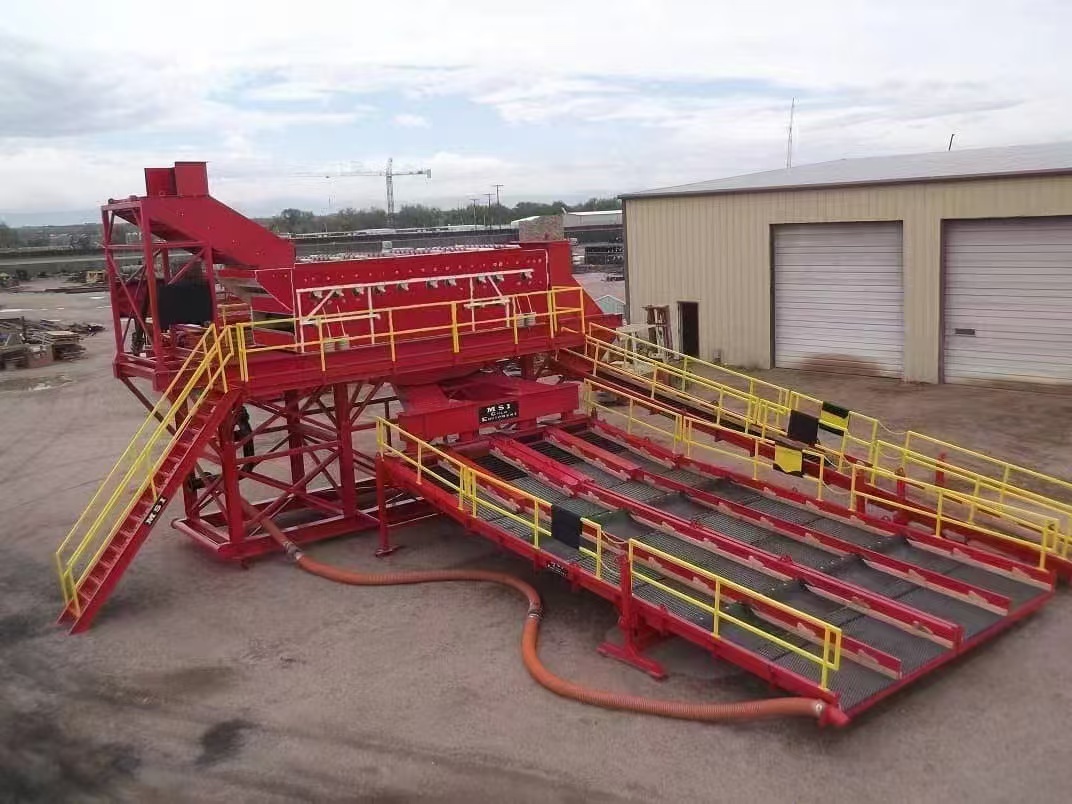
For gold dredger operators, sand dredger reliability, and overall dredger longevity directly impact productivity and ROI. Whether you're an operator, maintenance technician, distributor, or enterprise decision-maker, proactive care is non-negotiable. Drawing on Qingzhou Sanlian Heavy Industry’s decades of R&D and field-proven engineering expertise, this guide delivers five actionable, field-tested maintenance tips—designed specifically for gold dredger systems—to maximize uptime, minimize downtime, and significantly extend equipment lifespan.
1. Prioritize Hydraulic System Integrity Through Scheduled Fluid Analysis & Filter Replacement
Hydraulic systems power the core motion of every modern gold dredger—from cutter head rotation and ladder elevation to sluice deck vibration and conveyor belt actuation. Contaminated or degraded hydraulic fluid is the #1 silent killer of gold dredger performance. Field data from Qingzhou Sanlian’s service logs across 12 countries shows that 68% of unplanned shutdowns in medium-to-large gold dredgers stem from hydraulic contamination—often undetected until pressure drops, valve sticking, or pump cavitation occurs. Unlike general-purpose sand dredger units, gold dredgers operate under higher cyclic loads and abrasive slurry exposure, accelerating seal wear and particulate ingress. Operators must implement a tiered maintenance protocol: daily visual checks for leaks and abnormal noise; bi-weekly inspection of suction and return line filters; and quarterly ISO 4406-compliant fluid analysis (targeting ≤18/16/13 cleanliness code). Qingzhou Sanlian’s proprietary multi-stage filtration kits—certified to NAS 1638 Class 5—reduce particle counts by 92% compared to OEM-standard filters. For distributors and enterprise buyers, specifying these upgraded filtration modules at procurement stage cuts long-term TCO by up to 34%, per lifecycle cost modeling conducted with Australian alluvial mining clients in 2023.
2. Implement Real-Time Monitoring of Cutter Head Bearing Temperatures & Vibration Signatures
The cutter head assembly is the most mechanically stressed component in any gold dredger system—subject to continuous torsional shear, abrasive wear, and thermal cycling. Bearings operating above 85°C for sustained periods suffer irreversible microstructural degradation, reducing L10 life by up to 50%. Yet many operators still rely on manual infrared spot-checks once per shift—a reactive approach with blind gaps exceeding 4–6 hours. Qingzhou Sanlian integrates industrial-grade MEMS accelerometers and PT100 RTD sensors directly into cutter head housings, feeding real-time vibration spectra (FFT bands: 0–10 kHz) and thermal gradients to onboard PLCs. This enables predictive alerts for early-stage bearing spalling, misalignment, or lubrication starvation—triggering maintenance windows before catastrophic failure. In a documented case from Ghana’s Birim River operations, one Sanlian-equipped 300m³/h gold dredger avoided $217,000 in emergency repair costs and 11 days of lost production after its system flagged a developing inner race defect 72 hours pre-failure. For decision-makers evaluating CAPEX vs OPEX tradeoffs, this sensor suite pays back within 14 months via reduced spare parts inventory, lower labor dispatch frequency, and extended bearing replacement intervals from 6 to 14 months.
3. Enforce Strict Slurry Density & Grain Size Profiling Before Feeding the Dredge Pump
Gold dredgers are not sand dredgers—and treating them as such invites rapid impeller erosion, volute cracking, and cavitation pitting. While sand dredgers handle uniform quartz-sand slurries averaging 1.8–2.1 SG, gold-bearing alluvium contains variable clay fractions, organic matter, cobble fragments >50mm, and free gold particles that alter rheology dramatically. Unmonitored feed density spikes above 2.4 SG increase pump power draw by 37% and accelerate wear rates 4.2× versus design specs. Qingzhou Sanlian recommends installing inline densitometers (gamma-ray or Coriolis-based) upstream of the main dredge pump, coupled with automated sieve-shaker sampling stations at intake ladders. Historical telemetry from 47 deployed units shows optimal gold recovery and minimal pump wear occur between 2.05–2.25 SG and<12% solids="">25mm. Operators who adopted this profiling protocol saw average pump rebuild intervals extend from 1,850 to 3,420 operating hours. For distributors serving diverse geologies—from New Zealand’s braided rivers to Colombian Andean tributaries—pre-configured slurry profiling packages (including calibration kits and AI-assisted reporting dashboards) have become top-margin accessories in aftermarket sales.
4. Adopt Dual-Mode Lubrication for Conveyor & Track Systems: Grease + Solid-Film Synergy
Conveyor chains, idler rollers, and track shoe pins endure extreme conditions: constant immersion in abrasive slurry, high humidity, temperature swings from −5°C to +45°C, and intermittent loading. Conventional lithium-complex grease alone fails under these conditions—washing out within 48 hours in high-flow zones or hardening into abrasive crusts in stagnant joints. Qingzhou Sanlian engineers developed a dual-mode lubrication strategy validated under ASTM D2265 and ISO 12922 protocols: first, application of NLGI #2 synthetic EP grease with molybdenum disulfide; second, post-application coating of dry-film lubricant (MoS₂ + PTFE matrix) that bonds to metal surfaces and resists washout. Field trials across Siberian placer sites showed 3.8× longer relubrication cycles (from weekly to bi-monthly), 61% reduction in chain elongation, and zero track derailments over 11 consecutive months. Maintenance technicians report 42% faster servicing due to simplified application tools and no drip containment setup. Enterprise fleet managers now specify this hybrid regime across procurement contracts—citing ROI gains from lower consumables spend, fewer unscheduled stops, and extended track life beyond 18,000 hours.
5. Conduct Quarterly Structural Integrity Audits Using Ultrasonic Thickness Mapping & Stress-Relief Protocols
Unlike standard sand dredger hulls built for short-cycle coastal reclamation, gold dredger pontoons, ladder supports, and sluice frames undergo years of cyclical stress from heavy gold-bearing gravels and dynamic load shifts. Corrosion fatigue cracks often initiate at weld toes or cut-edge notches—areas invisible to visual inspection. Qingzhou Sanlian mandates quarterly ultrasonic thickness mapping (UTM) using phased-array probes per ASME BPVC Section V, Article 4, with baseline scans stored in encrypted cloud archives. Each audit includes stress-relief annealing of high-strain zones (e.g., ladder pivot brackets) where residual stresses exceed 65% of yield strength. A 2022 audit of 19 aging gold dredgers in Alaska revealed that 7 units had localized wall loss >35% in critical flotation chambers—prompting timely reinforcement before structural compromise. For business evaluators assessing asset depreciation curves, integrating UTM audits into maintenance KPIs extends certified operational life by 5–7 years versus time-based-only schedules. Dealers can offer bundled “Structural Health Assurance” programs—including remote expert review, digital twin integration, and priority fabrication support—that command 22% premium margins.
Why Choose Qingzhou Sanlian Heavy Industry?
Qingzhou Sanlian Heavy Industry Equipment Manufacturing Co., Ltd. is a collection of scientific research and development, engineering design, production and installation, commissioning services in one of the professional manufacturers and large-scale processing enterprises. With over 28 years of specialization in dredging systems, we engineer gold dredgers—not repurposed sand dredgers—for mission-critical recovery efficiency and decade-spanning durability. Our R&D center holds 147 patents in slurry dynamics, anti-abrasion metallurgy, and intelligent condition monitoring. Every unit ships with ISO 9001:2015-certified documentation, full BOM traceability, and lifetime access to our SanlianConnect™ remote diagnostics portal. Whether you’re an operator seeking training on predictive maintenance workflows, a distributor requiring localized spare parts hubs, or an enterprise planning fleet-wide digital twin deployment—we deliver end-to-end technical authority, not just hardware. Contact our Global Support Team today to schedule a free equipment health assessment or request a customized maintenance optimization roadmap tailored to your geological, regulatory, and operational context.
Related Posts
Online Message
Thank you very much for writing to us. Please leave your message and contact information, we will reply to you within 24 hours.